Expecting Fruit - #164

| Gospel Sync | Kingdom Kernels | Discipleship Matters Podcast | Website |
Welcome Back! Today, we’ll be looking at the Gospel of Luke to see Jesus’ expectations for our fruit bearing.
So let’s dive in.
(Click here to get a copy of the Gospel Sync document)
Luke 13:6-9
Then Jesus told this parable: “A man had a fig tree that was planted in his vineyard. He went to look for fruit on it, but did not find any. So he said to the keeper of the vineyard, ‘Look, for the past three years I have come to search for fruit on this fig tree and haven’t found any. Therefore cut it down! Why should it use up the soil?’ ‘Sir,’ the man replied, ‘leave it alone again this year, until I dig around it and fertilize it. If it bears fruit next year, fine. But if not, you can cut it down.’”
My Thoughts
This is one of those quotes from Jesus that doesn’t preach well to a congregation that only wants a loving Savior and not a Lord with expectations. Jesus is clearly expressing in story form what He not only desires of every follower but demands. Jesus talks about fruit (or fruitlessness) a lot. He says that we know a tree by its fruit (Matthew 7:16-20), that we can’t bear fruit without Him (John 15:5), bearing much fruit glorifies the Father (John 15:8), and He sent us to bear fruit (John 15:16). And I think He even gives us an object lesson before His entry into Jerusalem when He curses the fig tree (Matthew 21:18–22). The writers of the rest of the New Testament have some things to say about bearing fruit as well. Paul talks about the fruit of the Spirit (Galatians 5:22-23). The writer of Hebrews describes praise and worship as “the fruit of lips that confess His name” (Hebrews 13:15). James says righteousness is “sown in peace by those who make peace.” Peace-making produces righteous fruit (James 3:17-18). And Peter teaches that growing in Christian virtues keeps believers from being “unfruitful” in the knowledge of Christ (2 Peter 1:5-8). Just to name a few.
So what is the fruit Jesus and His Apostles are talking about? It can be several things:
Repentance
Christlike character
Obedience
Holiness
Good works
Perseverance
Worship and praise
Generosity
Disciple-making
Kingdom impact
Righteous living
Spiritual maturity
But if we spend all our time just defining what spiritual fruit looks like without actually bearing it, we miss the heart of Jesus’ parable. The Master expects a harvest. He is incredibly patient with us, graciously supplying the soil, the water, fertilizer, and the time we need to grow. But as we see in Luke 13:6-9, that patience isn’t a pass for endless stagnation. A tree that continually refuses to yield fruit is eventually “cut down.”
When it comes to discipleship, our responsibility doesn’t stop at our own personal growth. We are called to instruct, encourage, and boldly exhort those we are discipling to step into that same fruitful reality. We have to be willing to pass on both the gracious, high expectations of the Master, as well as His sobering warnings.
My Story
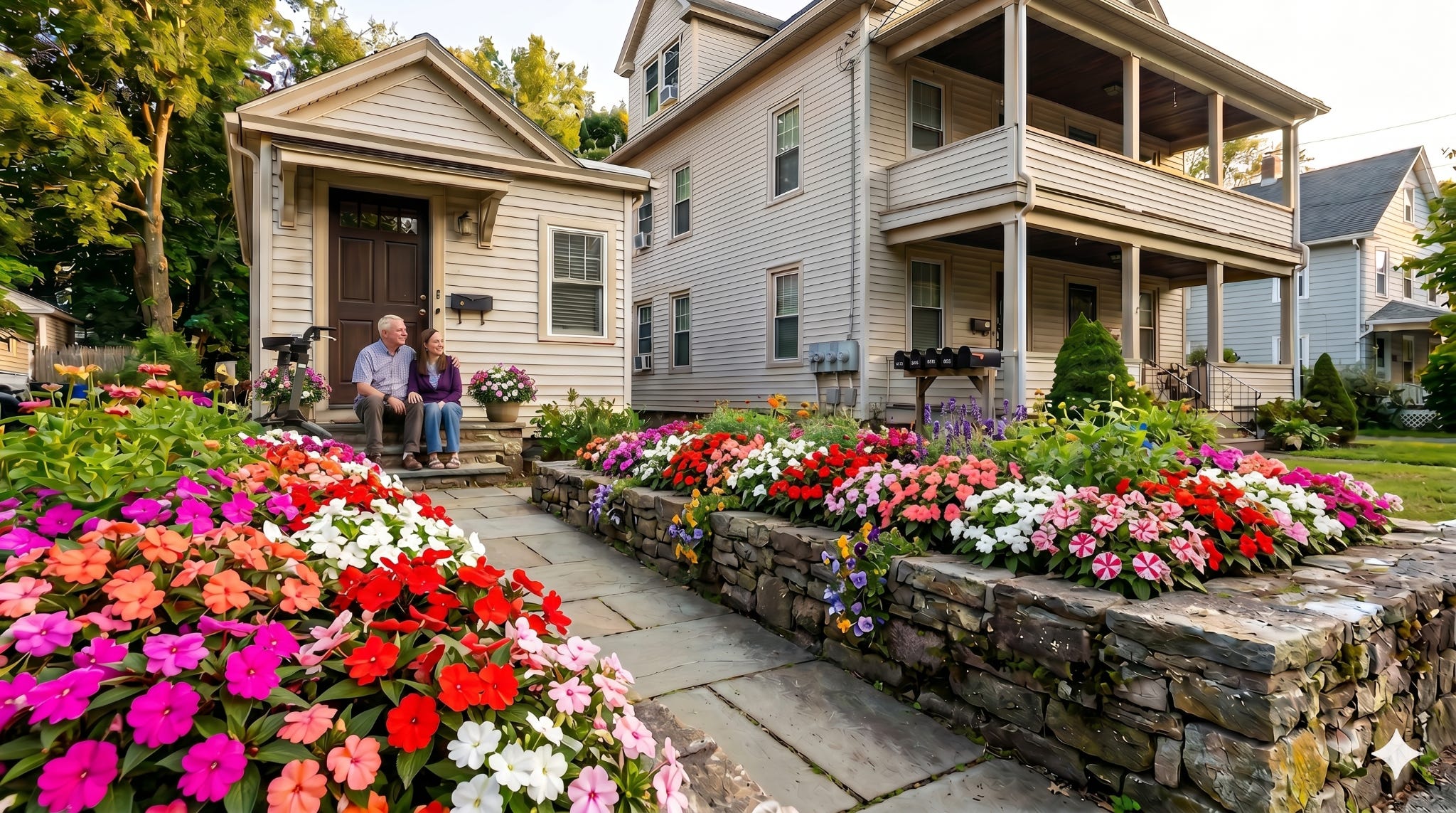
For a few years, Deb and I spent our summers in New York. We rented a small one-bedroom apartment with a beautiful private entryway — stone walls on either side, and neglected garden plots lining the walkway. You could tell someone had tended them once, but the beds had long since been overtaken by weeds. The one conspicuous exception was a single type of flower — Impatiens — a single color, scattered sporadically throughout the overgrowth, quietly thriving despite being nearly hidden from view.
I’m no green thumb — quite the opposite, really — but we decided to clean the beds up and plant more of what was already doing well. Impatiens it was.
We headed to the local Home Depot and bought three dozen little planters. It wouldn’t come close to filling all the space we’d cleared, but it was a start — more of an experiment than anything else. We got them in the ground, added a little fertilizer, and kept them watered. If you know anything about Impatiens, you know they have little seedling pods that pop when you touch them. They literally explode with seeds and can cover a pretty good area in no time. By the end of that summer both sides of the walkway were filled with color. The neighbors even started commenting on our horticultural expertise. Ha!
We were so pleased with those little flowers that we’d sit out on the stoop just to admire them. There was something wonderful about watching something so simple become something so beautiful — the seedlings dropping and spreading until the whole walkway was covered in blooms.
I’m sure God feels the same way about our fruitfulness.
Our Action Plan
Now it’s time for application. Here’s some ideas:
Conduct a focused Bible study specifically on “fruit.”
Discuss with those you are discipling what it truly means to bear fruit in their lives.
Identify the categories of spiritual fruit present in your life and pinpoint areas for improvement.
The Master’s expectation is clear: our lives must produce fruit. The challenge lies in identifying what that Biblical fruit is, and actively producing it. Let’s commit to being fruitful disciples of Jesus and help those we disciple do the same, moving beyond definition to demonstration.
| Gospel Sync | Kingdom Kernels | Discipleship Matters Podcast | Website |